
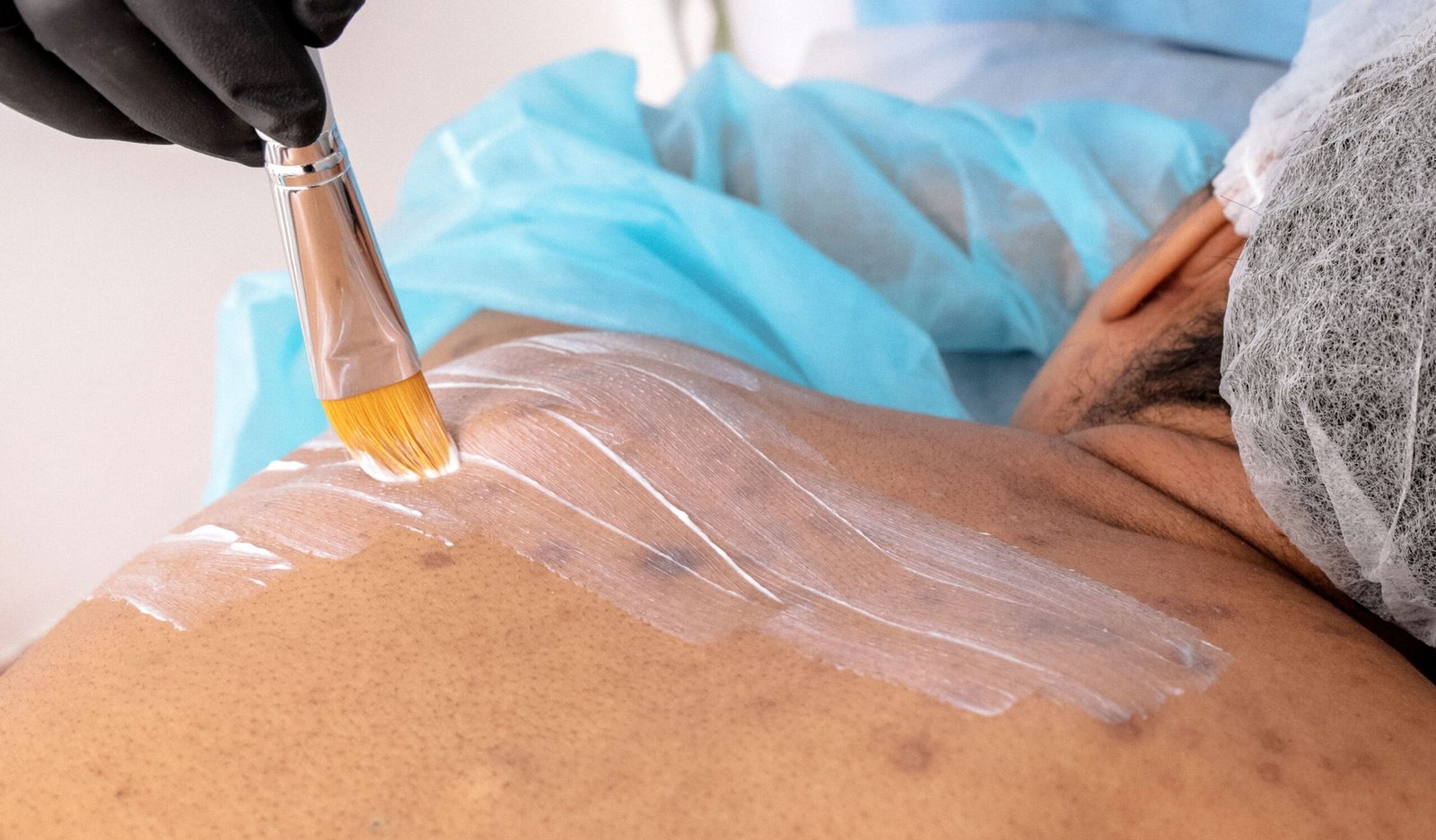
Most people get acne on their face, but for some people spots only develop on their backs, which is also known as bacne. It’s more common to have acne on both your face and back if you do struggle with bacne. But for some individuals they only get spots on their back and shoulders, and that can be a bit confusing – why is it only there and nowhere else?
The causes of acne on your back can be very similar to the causes of acne anywhere else on the body. However, there are a few things about the skin on your back that can make it more prone to breakouts.
1. Your back has a lot of oil glands
Your back and chest contain a higher concentration of sebaceous glands. These are glands that produce sebum (oil) which helps to support the acid mantle and keeps the skin barrier healthy and moisturised.
But problems tend to occur if your sebaceous glands start to produce too much oil. When this happens, the build-up of oil can increase the growth of acne-causing bacteria. If you combine this with a build-up of skin cells, you’ve unfortunately created the perfect environment for acne to develop.
Because your back and chest have more sebaceous glands compared to the face, you might be more prone to the acne being worse in these areas.
2. You’re sweating more than you realise
Don’t stop sweating! It’s good for you to get a sweat on, and sweat itself isn’t actually bad or ‘acne causing’. But what can happen is if you are sweating and wearing tight-fitting clothing, the combination of sweat, heat & friction may irritate the skin and affect the skin microbiome, which can then increase the risk of breakouts.
Think about how often you spend the day in gym clothes – even if you’re not exercising. Activewear has become increasingly popular as everyday clothing, meaning you might be wearing tight-fitting, synthetic clothing for hours on a daily basis. Also an environment that is dark, moist and warm can encourage fungal overgrowths on the skin too.
3. Your clothing could be contributing
This connects to what we just discussed above, the materials of clothing that you’re wearing my be affecting your skin too.
Polyester is used in a lot of clothing items now. It wasn’t something that I initially paid attention too. I just assumed that all clothing was mostly cotton, wool or silk. But it wasn’t until I started reading clothing labels that I became shocked at how many items of clothing are just polyester! The trick that brands often do is state that it’s a ‘wool blend’, ‘cotton blend’, ‘linen blend’ and when you check the label, is 50-70% polyester. ‘Satin’ clothing is often just polyester too, instead of silk. Some people can also be sensitive to wool (more so if you have allergies or eczema), so in those situations cotton may be the best alternative.
These synthetic materials can increase sweating and trap oil and moisture in the skin, as the fabrics aren’t as breathable compared to natural clothing. It’s also been found that certain types of bacteria (especially odour-causing bacteria) build up a lot more with polyester clothing.
Now you don’t need to throw your entire wardrobe away. But if you’re buying new clothes, you could experiment with more breathable natural fibres such as cotton, linen, silk or wool and see if it makes a difference to your skin. So make sure you keep reading your labels. If anything, it’s shocking when you see an item of clothing priced at £100+ and then you check the label to find it’s 100% polyester.
And don’t forget about your bra, sports bra or anything else that regularly rubs against your back.
4. It might not actually be acne
If the issue is just on your back and nowhere else, it might not actually be acne. And if you haven’t already, I’d recommend speaking with a medical professional to get it double checked.
Folliculitis is a condition that occurs when hair follicles become inflamed, and it can look a bit like a ‘rash’ of acne or little red spots and whiteheads. If you find your ‘bacne’ is itchy, painful, or the spots are crusting, I’d recommend speaking with a doctor or dermatologist to make sure it’s not an infection. The best way to treat it may be with anti-fungals or antibiotic medications.
5. Don’t ignore what’s happening beneath the skin
Just like acne on your face, there are internal issues that can trigger acne on the back. Remember we said the back has more sebaceous glands than the face? Well certain things can be happening internal which trigger the sebaceous glands to produce more oil. This can include:
- Blood glucose imbalances and high levels of insulin
- Hormone imbalances, such as high testosterone or DHT
- Stress and cortisol can also trigger the sebaceous gland
As well, other things may be contributing to how well your skin heals, such as:
- Nutrient deficiencies
- Gut health & the balance of bacteria in the gut
So if you have worked on all the topical things discussed above, but you haven’t looked into any internal drivers that could be causing the sebaceous glands to produce more oil, it might be time to dig a little deeper.
So, how do you get rid of bacne?
If your bacne is persistent, painful or severe, I’d start by getting it properly assessed.
1. Make sure it actually is acne. A GP or dermatologist can help determine whether you’re dealing with acne, folliculitis or another skin condition.
2. Look at your clothing and lifestyle. Don’t underestimate how much sweat, friction, tight clothing, sportswear might be impacting your skin and skin microbiome
3. Consider the bigger picture. If you’ve tried everything topically and your bacne keeps coming back, or just feels very stubborn, I’d recommend digging deeper into underlying drivers; we can do this in our sessions together.
4. Have some bacials – this is basically a facial, but it’s done on your back instead. A lot of treatments that people have for their facial acne can be done on on the back, and this can help to resolve the issue.



0 Comments